
The desk-job reality
What is ergonomics?
Ergonomics simply means fitting the job to your body, not your body to the job. Arrange your chair, desk and screen so your body stays in its natural, relaxed position instead of straining to fit the setup. Two ideas matter most:
- Neutral posture — ears over shoulders, shoulders over hips, joints relaxed in their mid-range: not reaching, twisting or slumping.
- Keep moving — no posture is good for too long. The best position is always your next one.
Your spine is built for curves
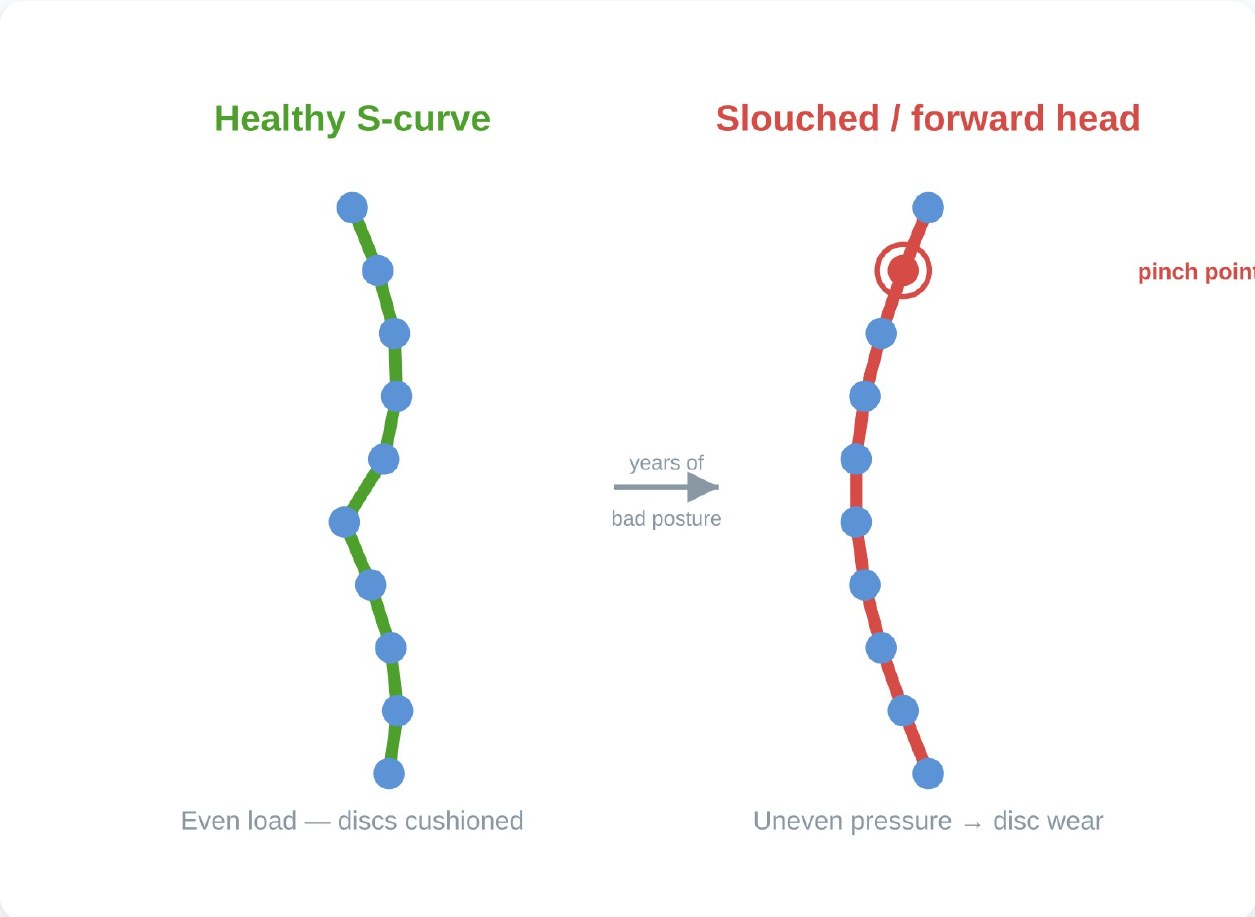
Your spine has natural S-shaped curves at the neck, mid-back and lower back that cushion every movement, with discs between the bones acting as shock absorbers. Slouching flattens those curves and squeezes the discs unevenly — the front edge gets pinched, hour after hour.
Good vs bad sitting posture
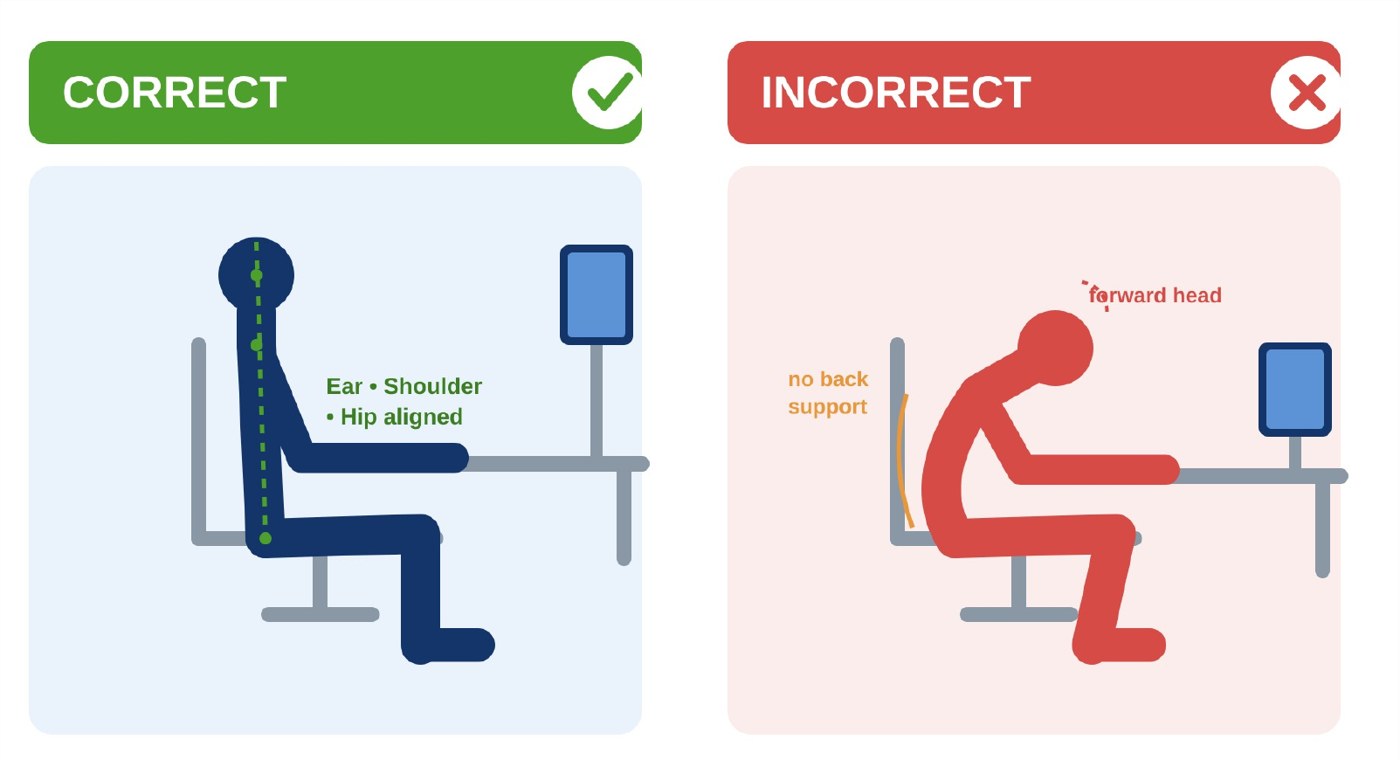
- Ears over shoulders over hips
- Back supported by the chair
- Shoulders relaxed, not hunched
- Elbows close, forearms level
- Feet flat on the floor
Set up your workstation once
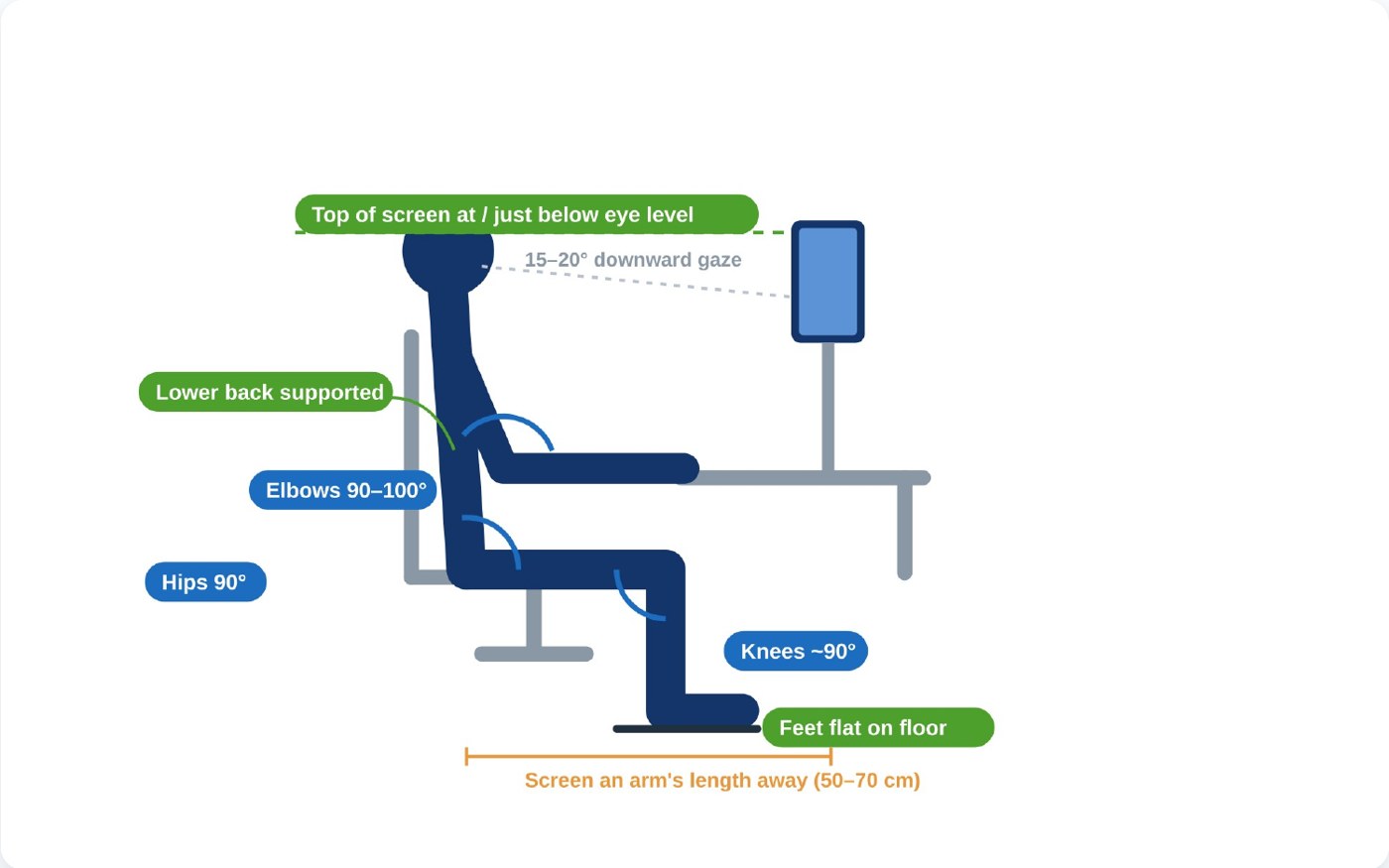
| Screen | Top of the screen at or just below eye level, about an arm's length (50–70 cm) away |
|---|---|
| Head | Look slightly down (15–20°) — never up, never craned forward |
| Arms | Elbows bent 90–100°, forearms level, wrists straight |
| Back | Sit right back so the chair supports your lower back |
| Legs | Hips and knees around 90°, thighs level, feet flat or on a footrest |
Five common desk mistakes
- Screen too low — your chin drops and your neck strains all day.
- Slouching — no lower-back support, so your back rounds.
- Feet dangling or legs crossed — your pelvis tilts.
- Phone cradling — phone pinned between ear and shoulder.
- Sitting still — hours without a single break.
“Text neck”: why looking down hurts
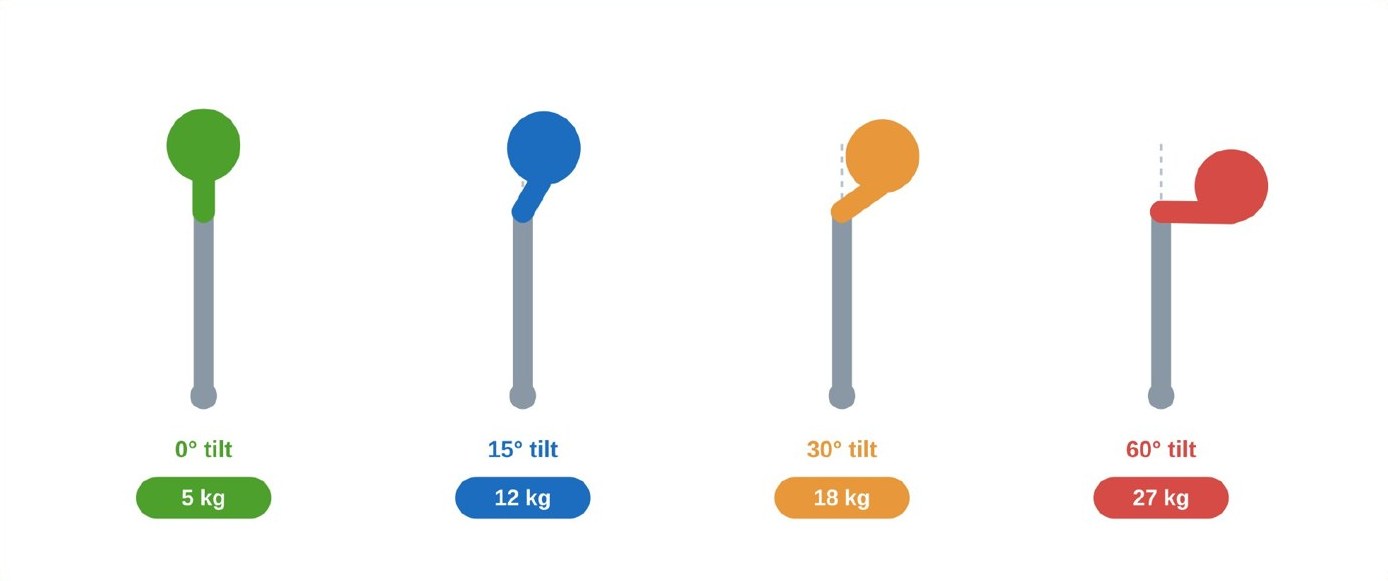
Your head weighs roughly 5 kg when balanced over your shoulders. As it tips forward, the effective load on your neck climbs quickly — to around 27 kg at 60°.
From slouch to spondylosis
Cervical spondylosis is age-related wear and tear of the discs and joints of the neck, and it is very common after the 40s. Posture doesn't cause it on its own, but hours of forward-head strain can speed up the wear and bring on symptoms sooner — stiffness, aches and headaches. To protect your neck:
- Keep screens at eye level — no looking down
- Sit tall with your ears stacked over your shoulders
- Take a movement break every 30 minutes
- Strengthen your neck, upper back and core
- Stay active — walk, stretch, keep mobile
Motion is lotion
Movement pumps fluid to your discs and resets tired muscles, so break up stillness often.
- Every 30 minutes: stand up, roll your shoulders, take a few steps. Set a quiet reminder.
- 20 · 20 · 20: every 20 minutes, look at something 20 feet away for 20 seconds.
- Move more, often: take calls standing, use the stairs, walk over instead of messaging.
- Change it up: shift how you sit through the day — micro-breaks beat one long stretch.
Desk resets you can do now
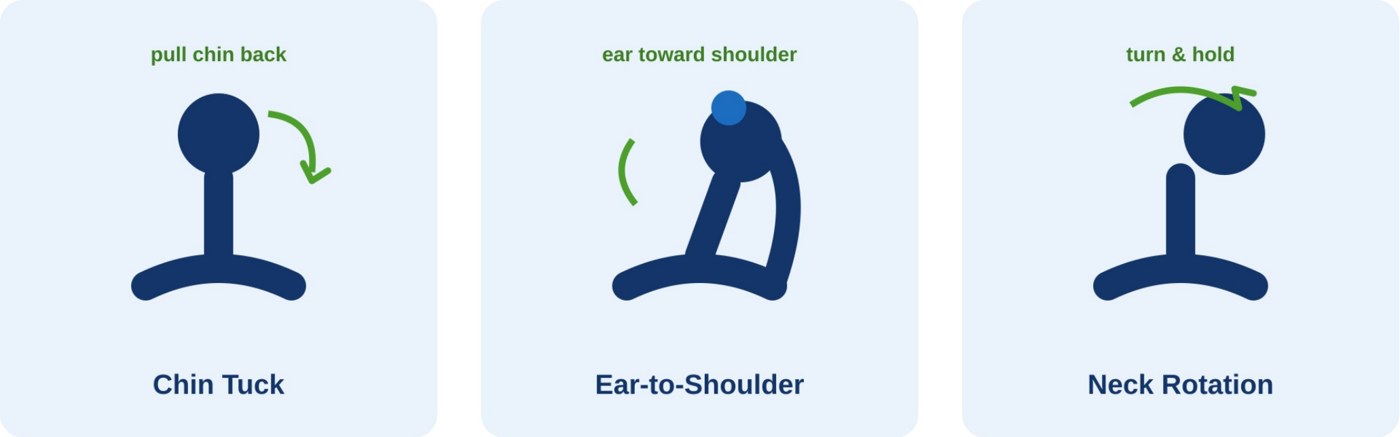
Neck: chin tuck, ear-to-shoulder, and gentle neck rotation.
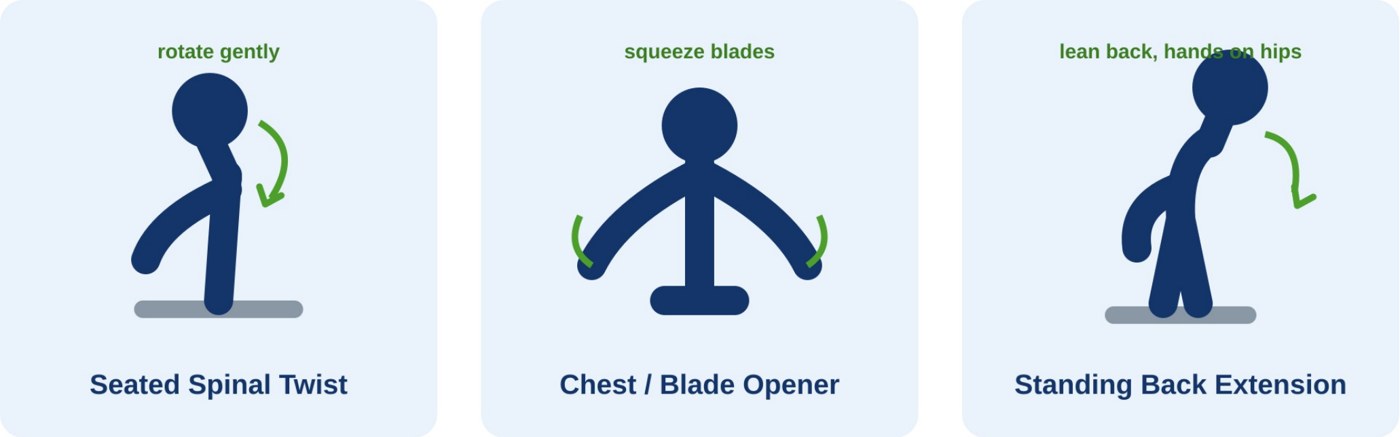
Back & shoulders: seated spinal twist, chest and shoulder-blade opener, and standing back extension.
Your daily desk-health checklist
- Screen top at eye level, an arm's length away
- Sit back — let the chair support your lower back
- Feet flat, hips and knees around 90°
- Elbows close, forearms level, wrists straight
- Chin tucked — ears stacked over shoulders
- Stand and move every 30 minutes
- 20-20-20 to rest your eyes and neck
- A 2-minute stretch break, a few times a day
This guide is general information, not a diagnosis. If you have pain that persists, spreads into an arm or leg, or comes with numbness or weakness, book an assessment. Motion Lab also offers workstation assessments and corporate wellness sessions.